
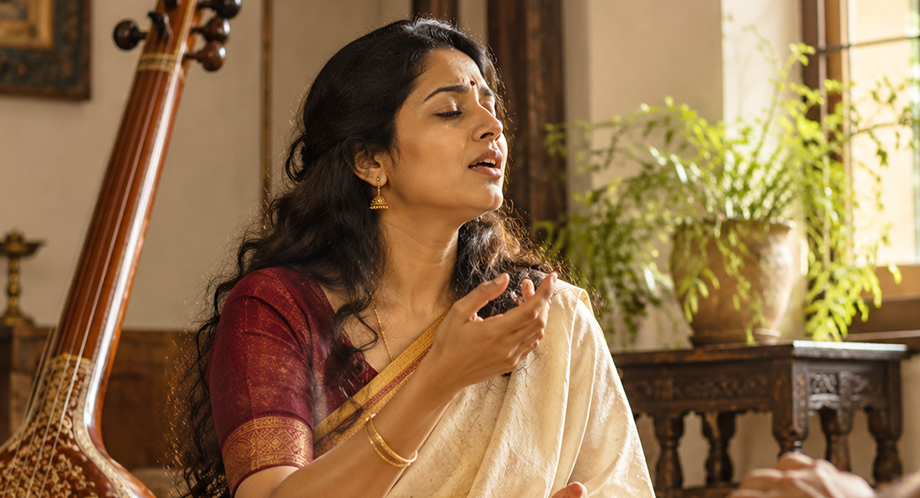
I often like to compare Alankar with jewellery. Just as a beautiful ornament enhances what is already beautiful, Alankar enhances the beauty of swaras and gives music greater depth, movement and character.
In Shastriya Sangeet, an Alankar is a group or sequence of swaras arranged according to a particular rule or pattern and then practised and sung. With regular practice, these patterns become an important part of a vocalist’s understanding of swara and voice movement.
Alankars are broadly explored through two movements:
Aaroha means the ascending movement of swaras. For example: Sa – Re – Ga – Ma – Pa – Dha – Ni – Ṡa
Avaroha means the descending movement of swaras: Ṡa – Ni – Dha – Pa – Ma – Ga – Re – Sa
These simple movements form the foundation for exploring more intricate patterns.
Another important concept is Palte. In simple words, Palte involves taking the swaras and rearranging or shuffling their sequence to create different patterns. For example, instead of simply singing Sa–Re–Ga–Ma, we may practise patterns such as Sa–Ga–Re–Ma or other structured combinations.
The purpose is not merely to sing more notes. It is to develop sur, clarity, control, agility and an instinctive understanding of swara relationships.
With consistent riyaaz, Alankars and Palte gradually become more than exercises. They become a way of training the voice and sharpening the musical mind.
Just as a pearl completes an ornament, these swara patterns bring their own beauty to a musical expression. And when every swara finds its right place, the music begins to shine.